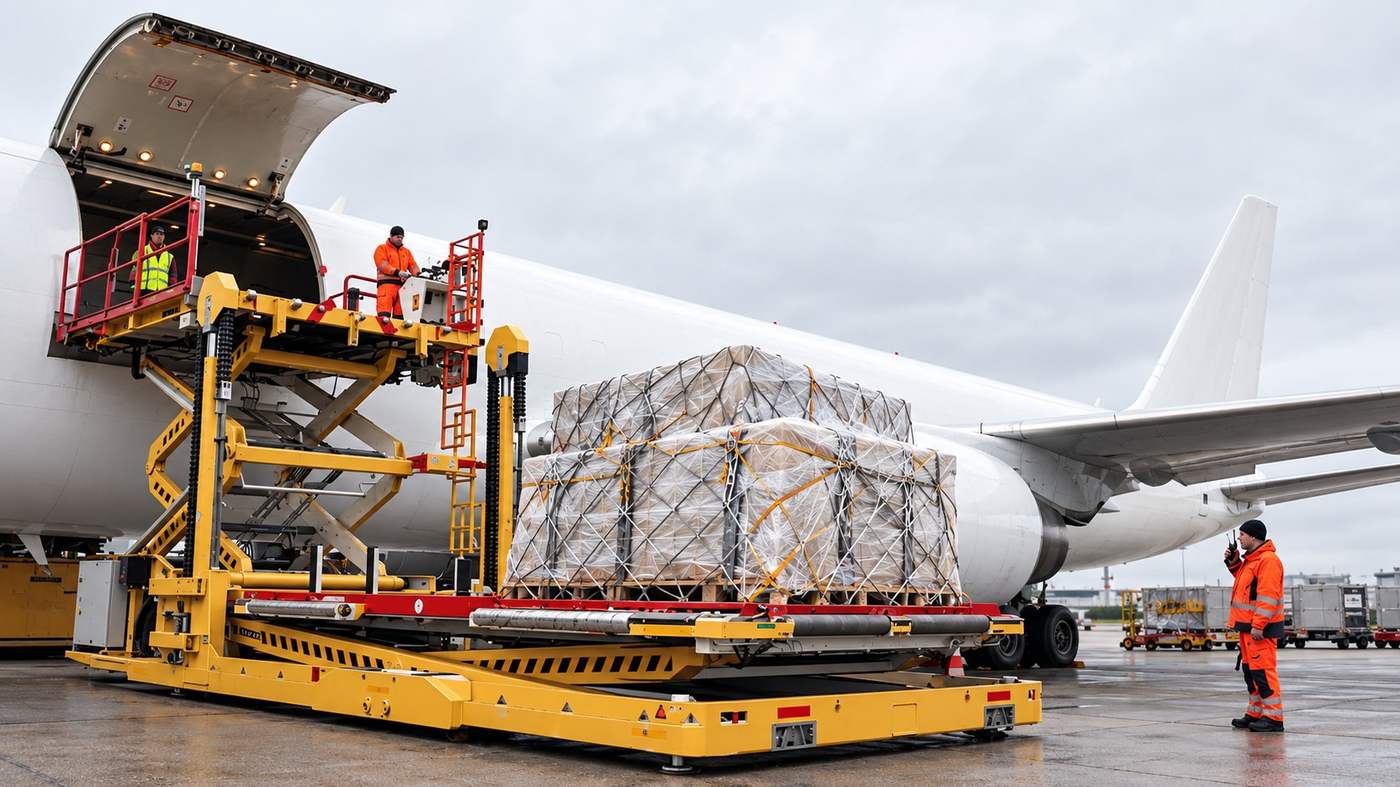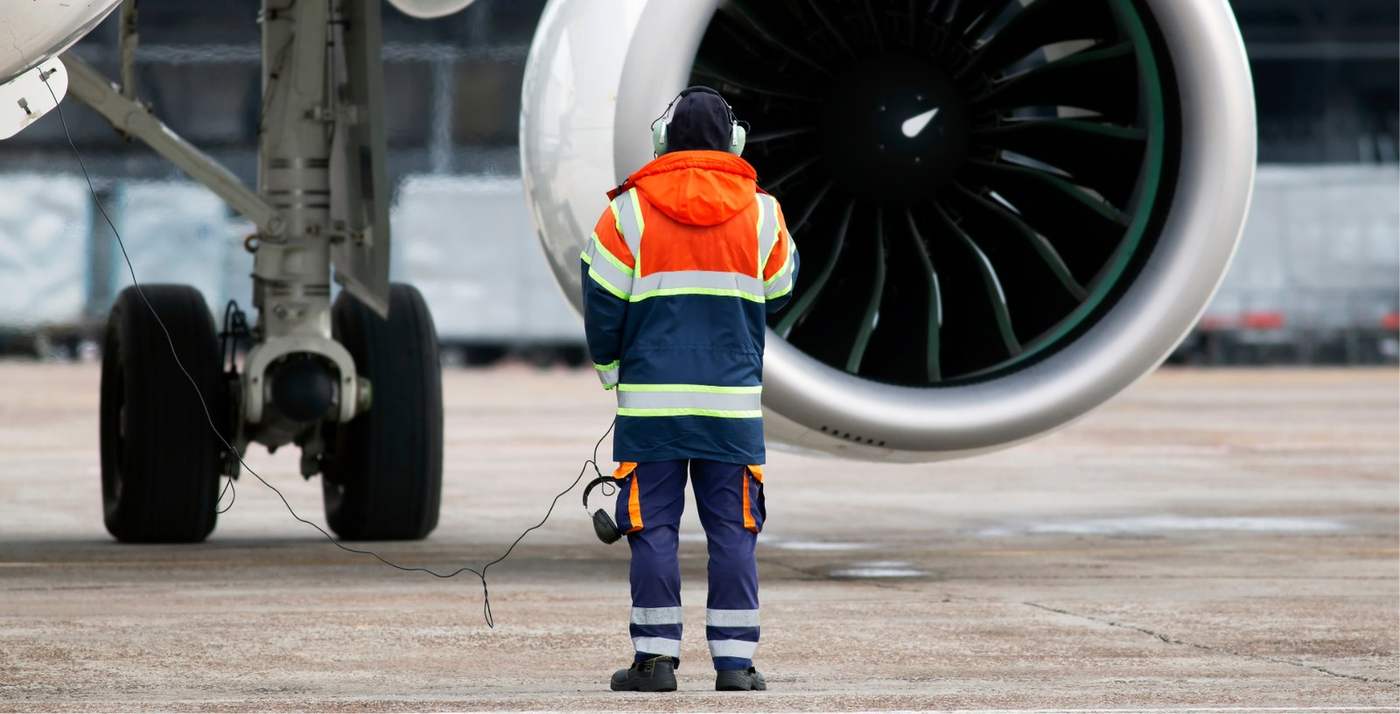

Every kilo of air freight you move spends more time on the ground than in the air. It is accepted, screened, built up, stored, broken down and released by a cargo handler, the companies working the warehouses and ramps at either end of the flight. For years that part of the chain quietly got cheaper and better, as handlers competed hard for airline business. A warning delivered in Athens this week suggests that era is ending.
Speaking at the Aviation Connect event, veteran handling investor Olivier Bijaoui of OB Invest cautioned that the ground-handling market has consolidated to the point where airlines are running short of credible alternatives, and that when choice disappears, prices do not stay low for long. For shippers, this is not an abstract airline problem. The cost and reliability of the ground leg feed straight into the rate you pay and the service you get. Here is what was said, why it matters, and how ACC keeps it from becoming your problem.
What Was Said in Athens
The argument from OB Invest is blunt: consolidation that once helped airlines is approaching the point where it starts to hurt them.
-
A warning about disappearing choice. “Airlines have to be very careful about the fact that their choice is getting slimmer and slimmer, and it will have an impact on their price whether they like it or not,” Bijaoui said.
-
Power shifting to the handlers. “When you are an airline and you have less and less potential choice, then the power goes in the other direction and then the procurement [teams], as good as they are, will not succeed because they have no choice.”
-
A call for a response. “What we are seeing is global networks taking more importance but there needs to be a response to this and an initiative because ultimately airlines will suffer whether they like it or not.”
-
Not an argument against competition. “I am all for competition and all for bringing this industry the capacity to have the best possible service at the right price, but there is a moment where somebody has to react to what the situation is.”
This is not a handler talking up his own prices. It is a long-time investor in the sector warning that the market has consolidated past the point of healthy competition.
How the Market Got Here
The handling business used to be crowded. Between 2000 and 2020, a long run of mergers and exits thinned the field, as independent cargo handlers were bought up or left the market and a handful of global networks, the likes of Swissport, WFS, dnata and SATS, grew to dominate it.
For most of that period, airlines won. More networks chasing their contracts, able to tender a handler across many stations at once, drove rates down hard. By one measure cited at the event, handling rates in some European markets fell by up to 67% between 2020 and 2025. That is a remarkable decline for a service that is labour-intensive, safety-critical and increasingly automated.
The expansion has not stopped. In the past week alone, WFS opened a new cargo terminal at Lyon and Swissport returned to the French market at EuroAirport Basel-Mulhouse, the big networks still planting flags. The difference now, Bijaoui argues, is that growth increasingly comes from the networks taking share from each other and from the last independents, rather than from genuinely new competition entering the market.
Why Cheap Today Can Mean Expensive Tomorrow
The mechanism is simple, and it is the same one that governs every concentrated supply market.
-
Competition sets the price, until there isn’t any. When a dozen handlers bid for a station, the airline holds the leverage. When the realistic choice narrows to two networks, or one, the leverage crosses the table.
-
Procurement can’t buy what isn’t offered. As Bijaoui put it, even the best procurement teams “will not succeed because they have no choice.” Skill at the negotiating table cannot manufacture a competitor that no longer exists.
-
Service is the quieter casualty. Price is the visible risk; service quality is the one that shows up as missed cut-offs, slower build-up and congested warehouses when a dominant handler has little reason to stretch.
None of this arrives overnight. That is precisely why it is easy to ignore until a renewal cycle lands and the number has moved, at which point the alternatives that would have disciplined it are gone.
Where Shippers Feel It
It would be comfortable to file this as a dispute between airlines and their suppliers. It isn’t. Handling is a real share of the total cost and transit time of an air shipment, and like every input cost on the ground leg, upward pressure there does not stay with the carrier, it works its way into rates, surcharges and, eventually, reliability.
ACC’s home market makes the point. Amsterdam Schiphol has seen its cargo-handling line-up reshuffled by the same forces, networks acquiring each other’s operations, new entrants navigating difficult openings, and when a single gateway’s ground capacity is concentrated in fewer hands, a local disruption or price move has fewer competitive checks on it. The shipper rarely sees the handler’s name on the invoice. They feel it in the rate and in whether the freight makes the flight.
The ACC Read: Keep the Shortlist Long
There is a neat symmetry here. The very thing Bijaoui warns airlines are losing, a long list of credible options, is what a neutral broker exists to preserve for shippers.
-
We don’t bank on one gateway. When the ground capacity at a hub concentrates, ACC can weigh an alternative routing where the handling is more competitive, rather than absorbing whatever the dominant handler charges.
-
We price the whole chain, not just the flight. The ground leg is where cost and delay quietly accumulate. Judging a lane on airport-to-airport rate alone misses exactly the part of the market that is now under pressure.
-
Optionality is the hedge. The lesson of consolidation is that leverage lives in having a real alternative. Keeping several carriers and gateways genuinely in play is not inefficiency, it is the discipline that keeps your costs honest as the supply base shrinks.
ACC owns no warehouses, no aircraft and no allegiance to a single hub. That independence is the point: when the market consolidates and choice narrows, our job is to keep yours open.
The Bottom Line
The warning from Athens is a leading indicator, not a headline you need to act on tomorrow. Handling got dramatically cheaper over the past five years because the market was competitive; it will get more expensive, and patchier, wherever it stops being so. Shippers who treat the ground leg as an afterthought, and the gateway as a given, are the most exposed. The ones who come out ahead will keep the shortlist long, on both the carrier and the handler side, and route their freight where the whole chain, start to finish, still competes for it.
Keep Your Options Open Before the Market Closes Them
If your freight has run through the same gateways and the same hands for years, now is the time to pressure-test it. ACC will benchmark your lanes end to end, including the ground legs that rarely make the quote, weigh the alternatives on cost, capacity, transit and reliability, and route your shipments where they genuinely move best. Talk to ACC about building optionality into your network before the next renewal, not after.
Sources: Air Cargo News, Damian Brett, “Cargo handler consolidation could disadvantage airlines” (30 September 2026), reporting remarks by Olivier Bijaoui (OB Invest) at Aviation Connect, Athens · Air Cargo News, “WFS opens cargo terminal at Lyon Airport” and “Swissport returns to French market with EuroAirport Basel-Mulhouse cargo operation” (30 September 2026)